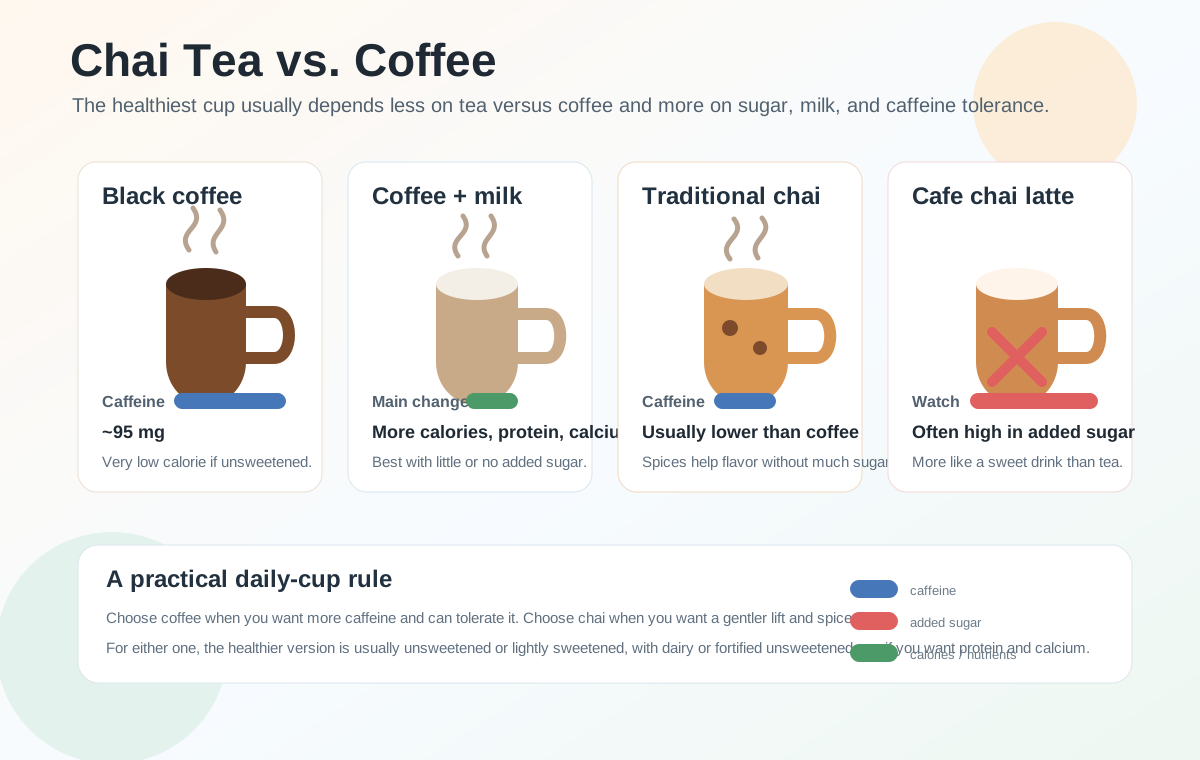
Comparing coffee and chai tea is harder than it sounds because the drinks people actually consume are not just coffee and tea. They are coffee with milk, coffee with cream, coffee with oat milk, chai made from black tea and spices, chai simmered with dairy milk, chai made with soy milk, and sweet cafe-style chai lattes made from concentrates.
So the honest answer is this: plain coffee and traditional chai can both be healthy choices. The less healthy version is usually the one with more sugar, more saturated fat, or more caffeine than a person tolerates well.
What is chai tea?
"Chai tea" is a common American phrase, though "chai" already means tea in several languages. What most people mean is masala chai: black tea brewed with spices such as cinnamon, ginger, cardamom, cloves, black pepper, and sometimes fennel or star anise. It is often served with milk and sugar.
That traditional version is very different from many coffee-shop chai lattes. A homemade chai can be lightly sweetened or not sweetened at all. A cafe chai latte may rely on a sweet concentrate or syrup, which can turn a tea-based drink into something closer to dessert.
Caffeine: coffee usually wins, but that is not always good
Coffee is usually the stronger caffeine drink. Harvard's Nutrition Source lists an 8-ounce cup of brewed coffee at about 95 milligrams of caffeine, and the FDA says that for most adults, 400 milligrams a day is an amount not generally associated with negative effects. That still leaves room for individual sensitivity. Some people sleep poorly, feel anxious, get reflux, or notice palpitations with much less than that.
Traditional black tea usually has less caffeine than coffee. Harvard notes that traditional teas generally have about half the caffeine of coffee, and even less if brewed briefly. That makes chai a good choice for people who want a warm, stimulating drink but do not want coffee's stronger jolt.
If you are choosing based on alertness, coffee has the edge. If you are choosing based on sleep, anxiety, or afternoon drinkability, chai may be the better daily habit.
Antioxidants and plant compounds
Coffee contains polyphenols, including chlorogenic acid, and a large body of observational research links moderate coffee drinking with lower risk of several chronic diseases. Harvard summarizes the evidence as generally favorable for moderate intake, while also noting that people who do not tolerate caffeine do not need to start drinking coffee for health.
Tea has its own polyphenols and flavonoids. Black tea, the base of most chai, is especially associated with theaflavins, while green tea is richer in catechins. The spices in chai also bring flavor and plant compounds, but they are usually consumed in small amounts, so they should not be treated like medicine.
In other words, both drinks can fit into a healthy diet. Coffee has more research behind it as a daily beverage in large population studies. Chai has the advantage of lower caffeine and a spice profile that can make less sugar feel more satisfying.
The milk question
Milk changes both drinks. A splash of milk in coffee adds relatively little, but a large latte is mostly milk. That can be useful if you want protein and calcium, but it also adds calories. Dairy milk contains natural lactose sugar, and whole milk adds more saturated fat than low-fat milk.
Plant-based milks vary widely. Unsweetened soy milk is usually the closest nutritional match to dairy milk because it has more protein than almond or oat milk. Fortified soy, oat, and almond milks can provide calcium and vitamin D, but homemade plant milks usually do not. Oat milk often tastes excellent in coffee and chai, but it may be higher in carbohydrates and lower in protein than soy milk. Almond milk is often lower in calories, but also usually lower in protein.
The best general rule is simple: choose unsweetened milk or plant milk, check the nutrition label, and make sure it provides what you actually want. If the milk substitute has added sugar and little protein, it may be a taste choice rather than a health upgrade.
Sugar is where chai can lose quickly
A lightly sweetened homemade chai can be perfectly reasonable. The problem is that many cafe chai drinks start sweet and get sweeter with flavored milk, whipped toppings, or extra syrup. This matters because added sugar recommendations are not generous: the American Heart Association recommends no more than 36 grams a day for men and 25 grams a day for women.
By comparison, a plain coffee with milk has no added sugar unless you add it. A latte made only with espresso and milk has natural milk sugar, not added syrup. A flavored latte, sweet creamer, or blended coffee drink can become just as sugary as a chai latte, so coffee does not automatically win. The healthiest coffee is usually the simple one.
So which is healthier?
If the comparison is black coffee versus sweet cafe chai latte, coffee is usually healthier because it is lower in sugar and calories. If the comparison is black coffee versus traditional unsweetened chai, both are good options, with coffee providing more caffeine and chai providing a gentler lift.
If the comparison is coffee with milk versus chai with milk, the healthier choice depends on the amount of sugar and the type of milk. Unsweetened coffee with a little dairy milk or fortified soy milk is a strong daily option. Traditional chai with milk and little or no sugar is also a strong daily option, especially for someone who wants less caffeine.
Best choices by goal
For energy: coffee is usually better because it has more caffeine.
For less caffeine: chai is usually better, especially in the afternoon.
For fewer calories: black coffee, plain tea, or lightly milked versions are best.
For protein and calcium: dairy milk or fortified unsweetened soy milk usually beats almond or oat milk.
For blood sugar: avoid sweet chai concentrates, flavored creamers, and syrup-heavy lattes.
For taste without much sugar: chai has an advantage because spices like cinnamon, ginger, and cardamom can make the drink feel sweet and rich even when the actual sugar is low.
The practical takeaway
There is no need to make this a team-coffee versus team-chai debate. Coffee is not automatically healthier because it is lower in sugar when plain, and chai is not automatically healthier because it sounds more herbal or traditional. The health profile lives in the details.
For most people, the best everyday versions are either black coffee or coffee with a modest amount of milk, or traditional chai made with black tea, spices, milk or unsweetened plant milk, and little sugar. The drinks to treat more cautiously are sweet chai lattes, flavored coffee drinks, and anything that turns a daily beverage into a large serving of dessert.
Sources and notes: Coffee and caffeine background from Harvard T.H. Chan School of Public Health: Coffee and the FDA's caffeine guidance. Tea polyphenols, caffeine, and additives from Harvard's tea overview. Added-sugar context from the American Heart Association. Plant milk comparison from Utah State University Extension. Cafe drink nutrition varies by chain, size, milk, and recipe; Starbucks menu pages are a useful example of how much calories and sugar can change between a simple latte and a chai latte.