In the earlier article, 10 Years of Lost Equity, the focus was on the damage done by the housing crash. A homeowner in a suburb of Atlanta could buy in 2002 and find the house worth less in 2012. The chart on that page showed the old American-dream problem after the financial crisis: people had been told that homeownership was the safest path to wealth, only to watch the wealth disappear.
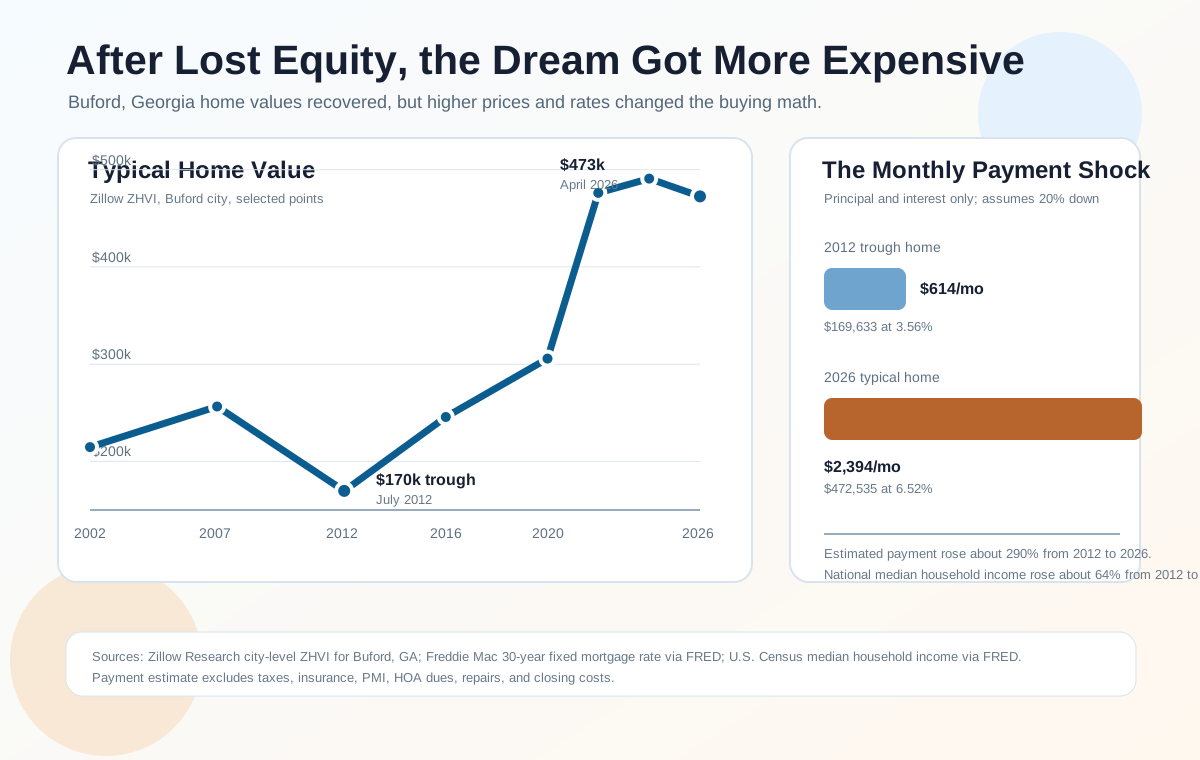
More than a decade later, the story has changed, but not in a simple way. Home values in Buford, Georgia recovered. In fact, they did far more than recover. Zillow's city-level Home Value Index shows a typical Buford home value of about $169,633 in July 2012. By April 2026, the figure was about $472,535. On paper, that is a huge victory for owners who held on.
But for buyers, the same recovery looks like a locked door. The American dream did not simply return to normal after the housing crisis. It became more expensive, more interest-rate-sensitive, and more dependent on whether a household already owned an asset before prices took off.
The recovery was real
Buford is useful because it is not an exotic housing market. It is part of the Atlanta metro area, a place where many middle-class households might reasonably expect to buy a home, build equity, and participate in the ordinary suburban version of the American dream.
The numbers show three chapters. First came the bubble: Buford's typical home value rose from about $214,710 in July 2002 to about $256,507 in July 2007. Then came the collapse: by July 2012, the value had fallen to about $169,633. Then came the long rebound and pandemic-era surge: about $245,685 in 2016, $305,727 in 2020, $476,167 in 2022, and $472,535 in April 2026.
That means the homeowner who survived the downturn and stayed in place could eventually recover the lost equity and then some. The person trying to enter the market later faced a different reality. The bargain that existed in 2012 was only useful to households with credit, cash, confidence, and job security at a moment when many families had none of those things.
The payment is the point
Looking only at home values understates the affordability shift. Interest rates matter. The $614 per month figure is not the price of the house or the full cost of ownership. It is a rough estimate of the monthly mortgage principal-and-interest payment for buying the typical Buford home in July 2012, assuming a 20% down payment and the Freddie Mac 30-year fixed mortgage rate at the time. It excludes property taxes, insurance, HOA dues, maintenance, PMI, and closing costs, but it gives a clean comparison with a similar 2026 mortgage estimate.
Using the April 2026 Buford value and the June 11, 2026 Freddie Mac rate of 6.52%, the same simplified calculation is about $2,394 per month. The typical value rose about 179% from the 2012 trough to 2026, but the estimated principal-and-interest payment rose about 290% because the buyer is paying a much higher price at a much higher rate.
That is the new American-dream problem. The house recovered as an asset, but the payment became much harder for a new buyer to carry.
Income did not move like house prices
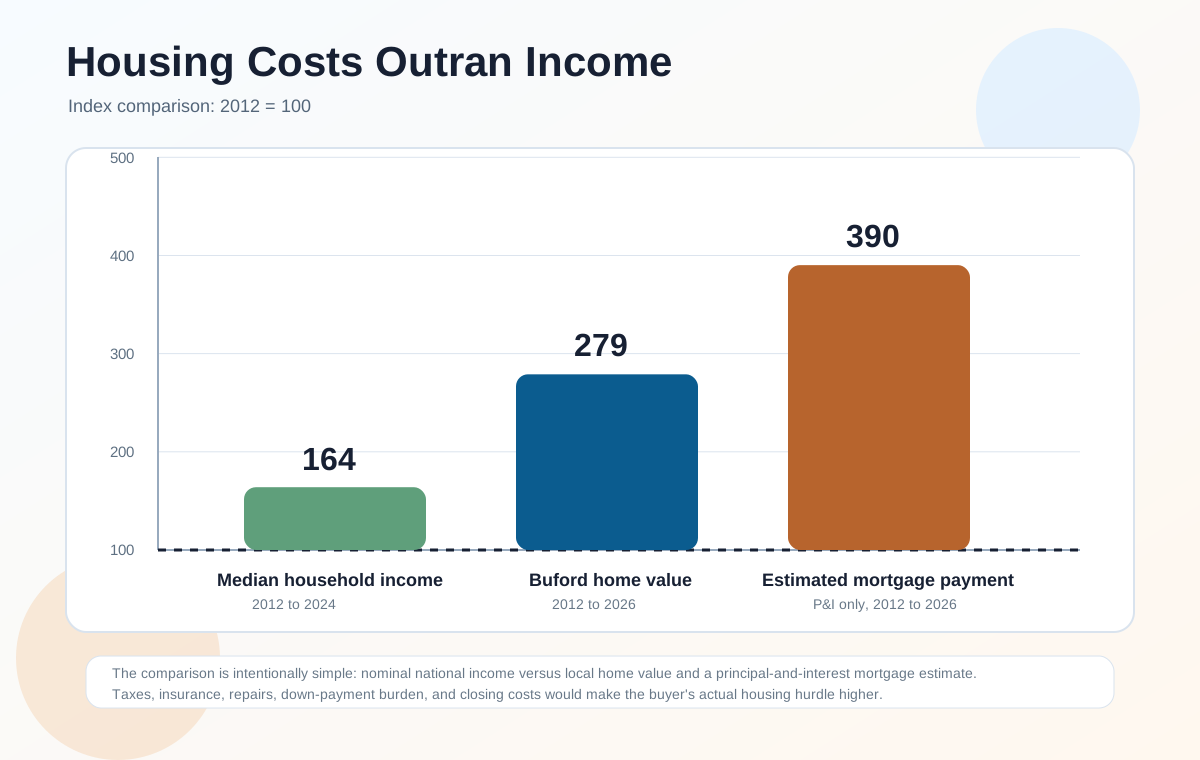
National median household income was $51,017 in 2012. FRED's Census-based series shows $83,730 in 2024, the latest annual figure available. That is a large nominal increase, about 64%, but it is nowhere near the increase in Buford home values from the 2012 trough to 2026.
That comparison is imperfect because a local household income series would be better than the national median, and 2024 income is being compared with 2026 housing costs. Still, the direction is hard to miss. Housing prices and mortgage payments have moved much faster than ordinary income. The result is that homeownership remains powerful for those who already own, while becoming harder for those trying to get in.
The affordability gap is now the central problem
Put more directly: housing is not as affordable as it was in the years after the crash. The 2012 market was painful for owners because values were depressed, but lower prices and low mortgage rates meant a buyer with stable income and credit could sometimes purchase at a relatively low monthly payment. The 2026 market is the reverse. Owners have more equity, but buyers face a much higher entry price.
Using 2012 as a baseline of 100, national median household income rose to about 164 by 2024. Buford's typical home value rose to about 279 by 2026. The simplified principal-and-interest mortgage estimate rose to about 390. That is the affordability squeeze in one picture: the cost of buying moved much faster than the income many households use to qualify for a loan.
This does not mean buying is impossible for everyone. It does mean the path has narrowed. A household now needs a larger down payment, a stronger income, better credit, and more tolerance for a high monthly payment. For many first-time buyers, the issue is no longer just whether the house will build wealth over time. It is whether they can get through the front door at all.
The dream became more divided
Before the crash, the mythology was that homeownership was almost automatically wealth-building. The crisis proved that was false. After the recovery, a different inequality appeared. Owners with fixed-rate mortgages benefited from rising values. Renters and first-time buyers faced higher prices, larger down payments, tougher debt-to-income math, and a market where waiting could mean falling further behind.
This is one reason the post-2009 recovery felt so uneven. Asset owners recovered faster than households living mainly on wages. A rising home value can repair a balance sheet for one family while making the same neighborhood less reachable for another. The same price increase is wealth for the seller and a barrier for the buyer.
Mortgage rates made the divide sharper. During the low-rate years, some buyers could stretch into higher prices because monthly payments were softened by cheap credit. In the 2020s, that cushion disappeared. A buyer now has to deal with both the higher price level and a rate environment far above the pandemic lows.
What changed since the housing crisis?
The housing crisis was about collapse, negative equity, foreclosures, and broken trust in the financial system. The current problem is more about scarcity and affordability. There are not enough attainable homes in the places where people want or need to live. Construction has not fully solved the shortage. Investors and cash buyers can compete with households that need financing. Insurance, property taxes, maintenance, and utilities have all become more visible costs.
So the American dream is not dead, but it is more conditional. It increasingly depends on when a household bought, whether it locked in a low mortgage rate, whether family wealth helped with the down payment, and whether income rose fast enough to keep up with housing costs.
The old article was right to focus on lost equity. That was the wound of the housing crash. The follow-up is that equity eventually came back for many owners, but the dream did not come back equally. In places like Buford, the house recovered. Affordability did not.
Sources and notes: This article follows up on 10 Years of Lost Equity. Buford home-value figures come from Zillow Research public city-level ZHVI data, RegionID 10614. Zillow explains that ZHVI is the typical home value for a region, not a median home value, in its ZHVI user guide. Mortgage-rate context comes from Freddie Mac's 30-Year Fixed Rate Mortgage Average via FRED. Median household income figures come from the Census Bureau series Median Household Income in the United States via FRED. Payment estimates assume 20% down on a 30-year fixed mortgage and include principal and interest only.