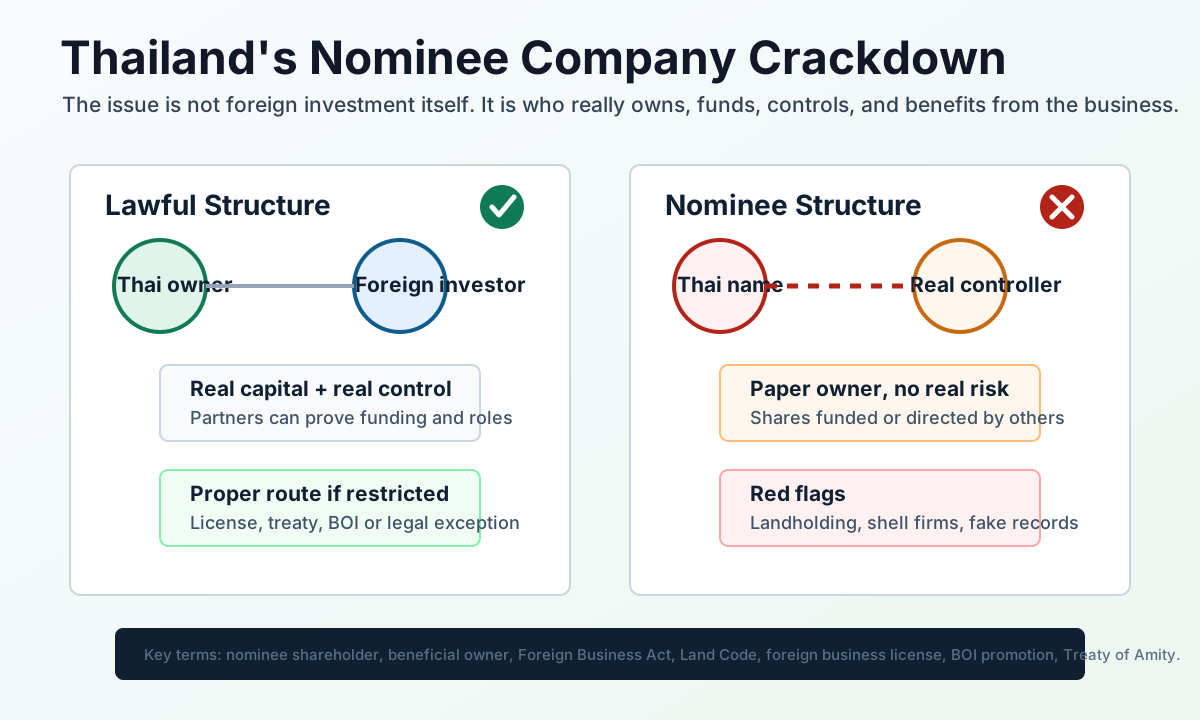
Thailand is widening a crackdown on foreign-linked businesses that authorities say are using Thai citizens as paper owners while foreigners control the real money, land, and operations behind the scenes. The latest wave is concentrated in southern tourism provinces, especially Phuket, Krabi, and Phang Nga, where police and business regulators have been examining companies connected to land, villas, hotels, restaurants, tourism, cannabis shops, entertainment venues, and fitness businesses.
The issue is not that foreigners are doing business in Thailand. Thailand has lawful pathways for foreign investment. The issue is a structure known as a nominee arrangement, where a Thai person appears on company documents as the majority shareholder or landholder but allegedly does not provide the real capital, take the real risk, or exercise real control.
What happened in the latest raids?
On June 20, 2026, Thai media reported coordinated raids across the Andaman coast. Thai Examiner reported that more than 500 police officers and officials raided locations in Phuket, Phang Nga, and Krabi, arresting 48 Thai and foreign suspects and putting more than 1 billion baht in land and assets under scrutiny. The report said investigators were looking at suspected nominee networks tied to villas, hotels, tourism, restaurants, cannabis businesses, entertainment firms, fitness centers, and landholding companies.
The Nation Thailand reported the same day that authorities had checked more than 30,000 Phuket companies, found more than 11,000 with foreign shareholders, and identified more than 600 firms considered at risk of nominee links. The Phuket targets included hotels, car rental businesses, tour companies, restaurants, and related operations in Patong and other high-value tourism areas.
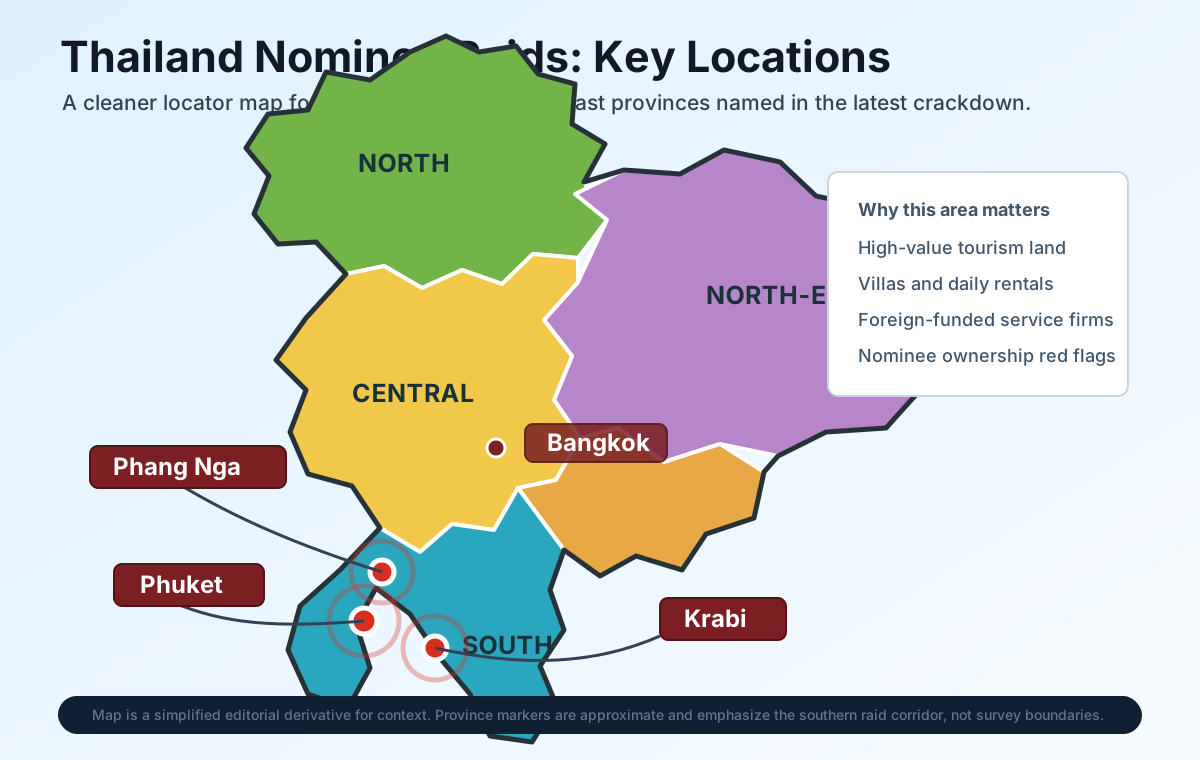
The raids follow a broader enforcement push. Al Jazeera reported earlier in June that Thai authorities had identified roughly 50,000 foreign-linked companies for closer scrutiny after years in which nominee structures were widely used in tourist destinations. That reporting described companies ranging from beauty salons to cannabis farms, with Thai nationals listed as majority owners even when foreigners allegedly supplied the money and controlled the business.
What is a nominee shareholder?
A nominee shareholder is someone who holds shares in name only for another person. In this context, it usually means a Thai citizen is listed as the owner of shares so that a company appears Thai-owned on paper, while a foreign investor is the real economic owner.
That can matter because Thailand's Foreign Business Act treats a company as foreign when foreigners hold at least half the capital or when the structure otherwise falls within the statutory definition. The Act restricts foreign participation in certain business categories and requires permission for many activities.
In normal language, the authorities are asking: who paid for the shares, who receives the profits, who controls the bank accounts, who makes the decisions, who signed the leases or land documents, and whether the Thai shareholders could realistically afford the assets they supposedly own.
The key legal idea: substance over form
The key concept is substance over form. A company may look Thai-owned because 51 percent of the shares are registered to Thai nationals. But regulators can look beyond the share register. If the Thai shareholders are employees, relatives, drivers, housekeepers, accountants, or paid signatories with no real investment, the structure can be treated as a nominee arrangement.
That is why simply saying "51 percent Thai-owned" is not always enough. Authorities can ask whether the Thai shareholders used their own funds, whether they receive dividends, whether they have voting power, whether they understand the business, and whether the foreign investor has side agreements giving them effective control.
The Bangkok law firm Tilleke & Gibbins explains that nominee arrangements are illegal when Thai nationals are used to hold shares for foreigners in a way that lets foreigners own or operate reserved businesses without authorization. The firm also notes that lawful alternatives may include a foreign business license, treaty protection, Board of Investment promotion, or other statutory permissions.
Why land is such a big part of the crackdown
Land is central because foreigners generally cannot own land in Thailand except through limited legal exceptions. A common risky structure has been for a foreign investor to set up a Thai company, give Thai citizens the majority of the shares on paper, and then have that company buy land, villas, or resort property.
That structure draws attention when a company has low registered capital but controls expensive land, when the same Thai names appear across many companies, or when the alleged Thai shareholders do not appear to have the financial capacity to buy the shares. In the current southern raids, investigators have focused heavily on land plots, villas, accommodation businesses, and property developers.
For legitimate foreign buyers, Thailand does allow some lawful routes, such as condominium ownership within foreign quota limits, long-term leases, BOI-approved projects, industrial estate structures, or properly licensed businesses. But using a Thai person as a front to hold land for a foreigner is exactly what the current crackdown is aimed at.
Which businesses are getting attention?
The businesses under scrutiny are heavily concentrated in tourism and property because that is where foreign money, land values, and local competition collide. The latest reports mention hotels, resorts, villas, daily rental accommodation, restaurants, car and motorcycle rentals, tour companies, cannabis shops, fitness centers, entertainment venues, property developers, and related service businesses.
These sectors have several red flags. They often need land or leases in expensive tourist zones. They may be operated day-to-day by foreigners. They compete directly with Thai small businesses. And they often use corporate vehicles for property ownership, permits, employees, work visas, and tax reporting.
Authorities are also looking at the professional ecosystem around these companies. Accounting firms, law firms, registration agents, and consultants can become part of the investigation if they are suspected of creating shell companies, recruiting Thai nominees, preparing false documents, or restructuring ownership to hide foreign control.
Important terms to know
Foreign Business Act (FBA): Thailand's main law restricting certain types of foreign business activity. It divides restricted activities into lists and can require a foreign business license or other approval.
Foreign business license (FBL): Permission for a foreigner or foreign company to operate a restricted business category. This is one lawful route, but it can be difficult and depends on the business activity.
Nominee shareholder: A person listed as a shareholder but allegedly holding shares for someone else. In the current cases, that usually means a Thai name used to conceal foreign ownership or control.
Beneficial owner: The person who actually benefits economically from the company, even if someone else appears on paper. Investigators care about beneficial ownership because it reveals who really controls the asset.
Juristic person: A legal entity, such as a company, that can own property, enter contracts, sue, and be sued. Thai reports often use this term when discussing registered companies.
Land Code: The body of Thai law governing land ownership and land rights. It is especially important because foreign ownership of land is tightly restricted.
Board of Investment, or BOI: Thailand's investment promotion agency. Some BOI-promoted businesses may receive privileges that make foreign ownership or land use possible under specific conditions.
Treaty of Amity: A U.S.-Thailand treaty that can give qualifying American-owned businesses national treatment in many sectors, though not all activities are covered and licensing still matters.
Why Thailand is acting now
The crackdown is partly about law enforcement and partly about politics. In tourist areas, Thai businesses have complained that foreign-controlled companies use Thai fronts to compete in sectors that were meant to remain locally controlled. Authorities also worry that nominee structures can be used for tax avoidance, work-permit abuse, money laundering, illegal landholding, and transnational crime.
There is also a technology angle. Thai officials have been cross-checking company registration data, land records, shareholder names, financial capacity, and patterns across multiple companies. If one person appears as a shareholder in hundreds of entities, or if a low-income shareholder supposedly owns shares in expensive landholding companies, that becomes easier to detect than it once was.
The broader business lesson
The lesson for foreign investors is that Thailand is moving from a paper-based view of ownership toward a more substantive one. A company cannot rely only on the appearance of Thai majority ownership if the money, control, documents, and benefits point somewhere else.
For Thailand, the challenge is to punish sham structures without scaring away legitimate investment. Tourist provinces depend on foreign capital, foreign residents, international buyers, and global hospitality brands. But when foreign investors use local people as fronts, it creates a distorted market: land prices rise, Thai competitors feel undercut, and the legal system appears optional for those with the right fixer.
That is why this crackdown matters beyond Phuket or Krabi. It is a test of whether Thailand can keep welcoming foreign business while enforcing the line between a real joint venture and a nominee company. The difference is not just whose name appears on the paperwork. It is who actually owns the business.