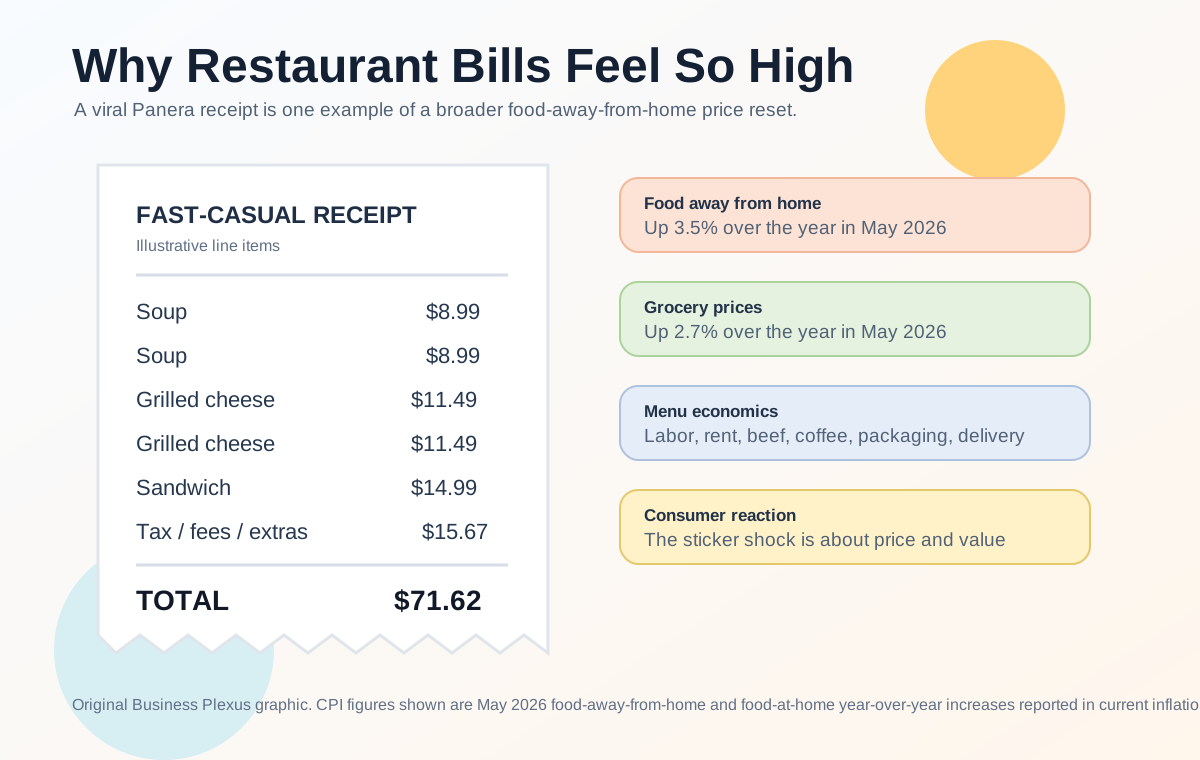
A Yahoo Life article syndicated from the Daily Dot described a post on X by @MatrixMysteries showing a Panera Bread receipt that totaled $71.62 for two soups, two grilled cheese sandwiches, and another sandwich. The reaction was the obvious one: how did a basic fast-casual order become a seventy-dollar purchase?
X reference: Yahoo/Daily Dot identified the viral Panera receipt video as coming from @MatrixMysteries on X. The server-rendered Yahoo page did not expose a stable individual X status URL, so this article links to the creator account and the syndicated Yahoo/Daily Dot report rather than inventing a post URL.
The receipt is memorable because the food sounds ordinary. This was not a steakhouse dinner or a special night out. It was soup and sandwiches from a chain that many people still mentally file under quick, casual, and reasonably affordable. That mental category is breaking down.
It is not just Panera
Panera is an easy target because its menu sits in the uncomfortable middle: more expensive than drive-thru fast food, but still casual enough that customers do not expect a restaurant bill. But similar complaints are showing up around the whole chain-restaurant world.
The New York Post reported in 2026 on customer backlash to McDonald's promoting a $2.50 McDouble as a value item, with customers comparing it to the old 99-cent burger era. The same coverage pointed to social-media examples including an $18 Big Mac combo in Connecticut and a reported $50 Shake Shack order for two sandwiches and a drink. The details vary by market, taxes, fees, and add-ons, but the pattern is consistent: customers are recalculating what "cheap food" means.
Taco Bell has seen a similar nostalgia problem. Customers remember a time when a few dollars could cover several items. Now a single burrito or combo can cost what an entire small order used to cost. The company has responded with value menus, but even those promotions often prove the larger point: chains are trying to rebuild the perception of affordability after years of menu-price increases.
The CPI confirms what people feel
The sticker shock is not just anecdotal. Current inflation coverage based on Bureau of Labor Statistics data shows that food away from home rose 3.5% over the year through May 2026. Grocery prices also rose, but more slowly, up 2.7% over the same period. That gap matters because restaurants have costs that home cooks do not: labor, rent, utilities, insurance, card fees, delivery-platform costs, packaging, waste, and corporate overhead.
Food & Wine, citing Toast menu-price data across about 164,000 restaurant locations, reported that some common restaurant items are still climbing faster than the headline number. Coffee, beer, and burgers were among the items getting more expensive, with coffee especially affected by weather and global supply-chain pressures. Beef prices have also been under pressure from cattle-supply problems, drought, and import restrictions.
Why it feels worse than the monthly inflation number
A 3.5% annual increase does not sound like enough to explain a $71 soup-and-sandwich receipt. The reason is cumulative inflation. Consumers are not comparing today's menu to last month. They are comparing it to what they remember from 2018, 2020, or 2022. If a meal moved from $38 to $48 to $58 to $71 over several years, the latest increase may be modest while the total price level still feels absurd.
There is also a value problem. A customer may accept a high price when the meal feels special, generous, or better than what could be made at home. The backlash begins when the product still feels like a basic chain meal. That is why social media posts about receipts spread so quickly: the image of the receipt lets people compare price against perceived value instantly.
What is driving restaurant prices?
Several pressures are stacking together. Labor is a major one. Restaurants are labor-intensive, and wages have risen in many markets. Rent, insurance, utilities, credit-card fees, packaging, and equipment costs have also increased. Food inputs remain volatile: beef, coffee, dairy, eggs, produce, and cooking oils can move sharply depending on weather, disease, tariffs, transport costs, and supply-chain shocks.
Delivery and digital ordering changed the math too. Delivery platforms, app discounts, loyalty programs, third-party commissions, and packaging costs all affect menu architecture. A chain may raise base prices while steering customers toward app-only deals, bundles, or rewards. That can make the posted menu feel expensive and the actual best price harder to find.
Finally, companies are testing how much pricing power they still have. During the pandemic and the years after it, consumers got used to price increases because everything was rising. Some restaurants used that period to reset menu prices. Now consumers are pushing back, but the old price anchor is gone.
The real problem is affordability, not soup
The Panera receipt went viral because it compressed the whole affordability debate into one image. It is not really about whether a bowl of soup should cost one exact price. It is about the feeling that ordinary life keeps moving into premium-price territory: lunch, groceries, rent, insurance, a cup of coffee, a burger after work.
Restaurants are not facing imaginary costs, and not every high receipt is proof of gouging. But consumers are also not imagining the pressure. The food economy has reset around higher wages, higher input costs, higher rents, higher fees, and higher corporate pricing expectations. Until wages and household budgets catch up, a $71 chain-restaurant receipt will keep feeling less like an outlier and more like a warning sign.
Sources and notes: Starting example from Yahoo Life / Daily Dot. Current restaurant CPI context from MarketWatch and related BLS-based inflation coverage. Menu-price drivers from Food & Wine. Chain-price anecdotes from New York Post / The Takeout coverage of McDonald's value backlash and New York Post coverage of fast-food price complaints.