Many people across the United States got the idea that home ownership was the epitomy of living the American Dream, but as a result of Wall Streen shenigans, it seems this dream is lost for over a decade. Take a look at this chart of a suburb of Atlanta. It is not even among the worst hit. Someone who bought a house in 2002 finds their house worth less in 2012. What is even worse is the people hurt by this also support people in Congress who are against government regulation, when Wall Street tycoons walked away scott free with Billions, if not Trillion, of dollars.
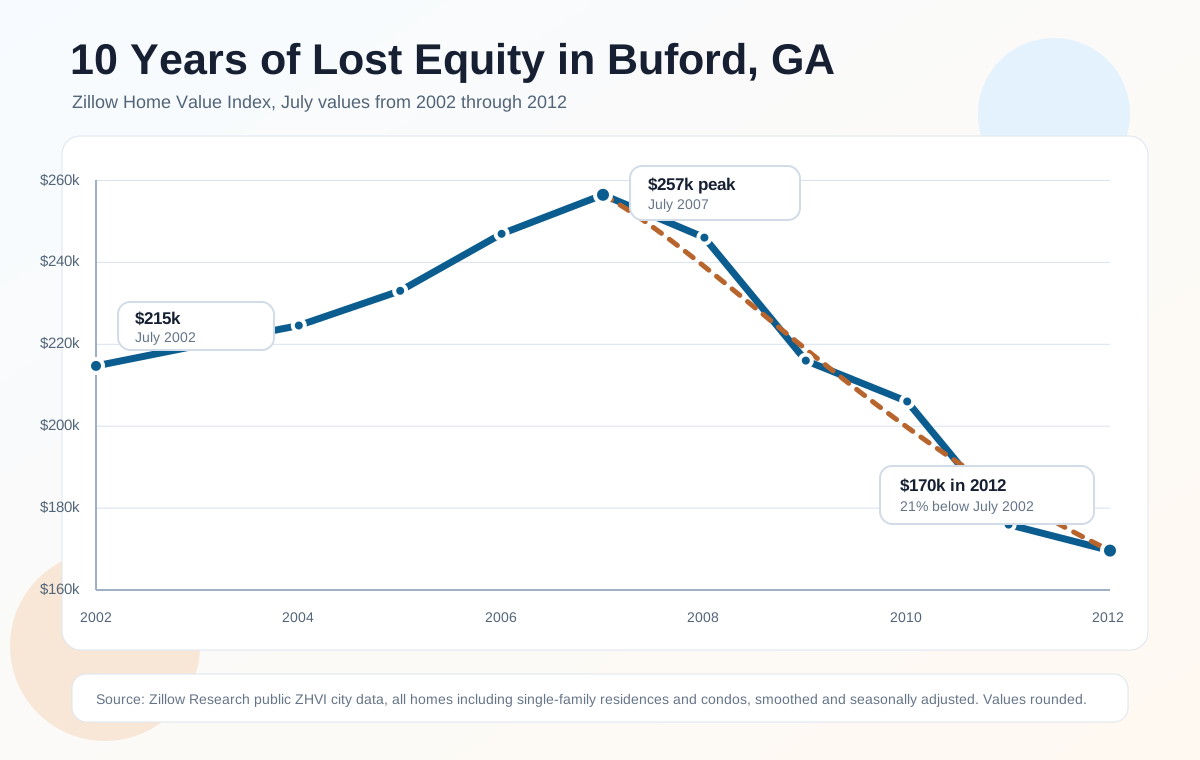
The old embedded Zillow chart on this page no longer loads, but the underlying story is still clear in Zillow's current public Home Value Index data. For Buford, Georgia, Zillow's city-level ZHVI shows a typical home value of about $214,710 in July 2002. By July 2012, it was about $169,633. That is a drop of roughly 21% over the exact decade discussed in the original post.
The damage looks even worse if measured from the bubble peak. Buford's July value rose to about $256,507 in 2007 before sliding through the housing crash. By July 2012, the typical value was about 34% below that peak. For a homeowner who bought near the top with a small down payment, the decline could wipe out equity completely and leave the mortgage larger than the house was worth.
That is why the phrase "lost equity" matters. A house is not just shelter in the American financial system. It is collateral, retirement security, family wealth, and often the largest asset a household owns. When values fall for years, people can become trapped. They may be unable to sell, unable to refinance, unable to move for work, and unable to borrow against the equity they thought they had built.
It is also important that Buford was not an exotic case. It was a suburb in the Atlanta metro area, and many ordinary places saw the same pattern: a steady rise, a bubble peak, then a collapse that erased years of gains. The local chart is useful precisely because it is not one of the most extreme examples. It shows how a national credit bubble became a household balance-sheet crisis in ordinary communities.
The broader lesson is that homeownership can build wealth, but only when the financing system is stable enough that families are not being pushed into inflated prices and fragile loans. The crash exposed how much risk had been shifted onto households while the financial sector treated mortgages as raw material for trading profits. When the bubble broke, homeowners carried the losses in the form of negative equity, foreclosures, damaged credit, and years of delayed mobility.
Sources and notes: Chart recreated from Zillow Research public city-level ZHVI data for Buford, Georgia, RegionID 10614, using July values from 2002 through 2012. Zillow explains that ZHVI represents the typical home value for a region and should not be described as a median home value. Current Buford market context is available on Zillow's Buford home values page.