People searching for a "Plexus lawsuit" may run into a March 2025 BBB National Programs page about Plexus WorldWide, LLC. That page is important, but it should be described carefully: it was not a court lawsuit or a judgment against the company. It was an advertising self-regulation matter handled by the Direct Selling Self-Regulatory Council, or DSSRC, a BBB National Programs program that monitors claims in the direct selling industry.
That distinction matters. A lawsuit suggests a court case, legal complaint, damages, or a judge's ruling. The BBB Programs matter was an administrative closure after Plexus took action on the social media claims DSSRC identified. Still, the case is worth looking at because it shows a much broader business problem: income claims in multi-level marketing often spread through ordinary-looking social posts long before a regulator, company compliance team, or self-regulatory body catches up.
For clarity, Plexus WorldWide, LLC is a health and wellness direct selling company based in Scottsdale, Arizona. It is not affiliated with Business Plexus, the name of this website.
What the BBB Programs case said
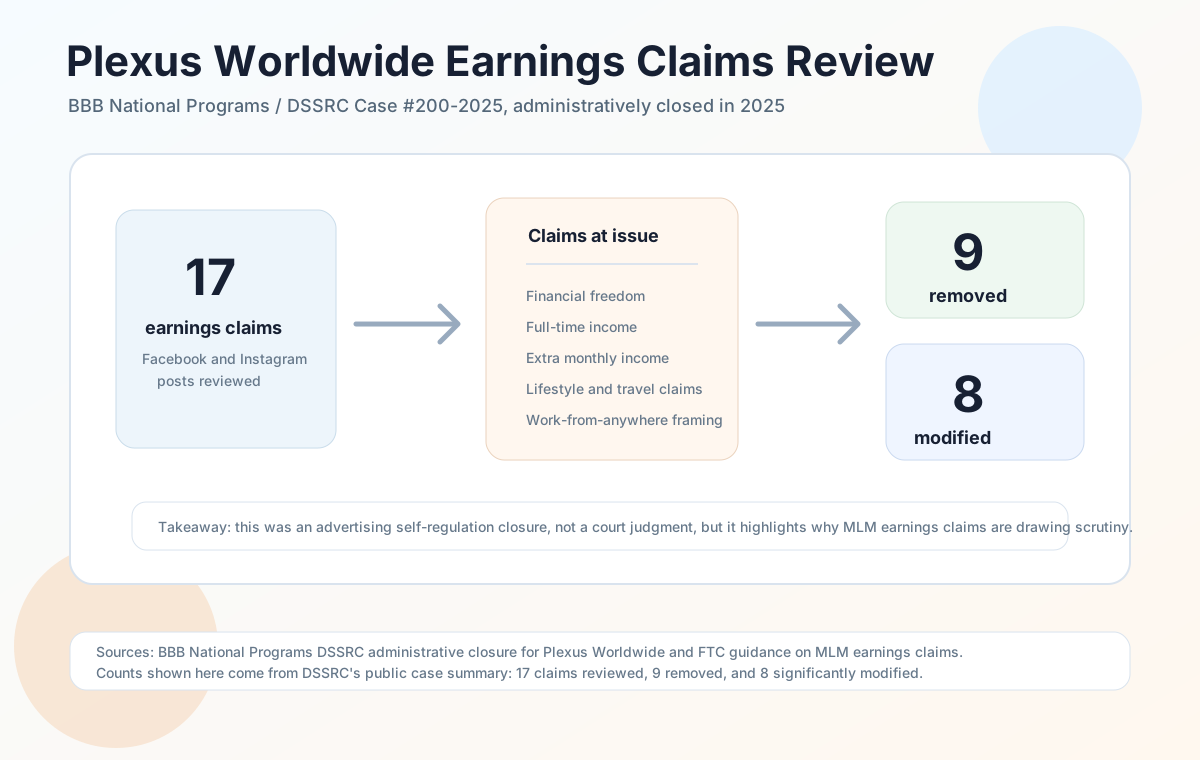
According to BBB National Programs, DSSRC opened the Plexus inquiry through its independent monitoring of advertising and marketing claims in the direct selling industry. The inquiry concerned 17 earnings claims that appeared on Facebook and Instagram. DSSRC was concerned that the claims could overstate the income generally expected by a typical Plexus salesforce member.
The examples were familiar to anyone who has seen direct selling recruitment online: claims about financial freedom, full-time income, earning extra money from home, paying bills, taking vacations, helping a spouse quit a second job, and earning hundreds or thousands of dollars a month. These kinds of statements are powerful because they do not always look like ads. They can look like personal stories, family updates, motivational posts, or casual side-hustle invitations.
Plexus responded to the inquiry and contacted the people responsible for the posts. BBB National Programs reported that nine posts were removed and eight were significantly modified. DSSRC acknowledged the company's good-faith actions and administratively closed the inquiry. The closure date listed in the case summary was February 7, 2025.
Why this still matters if it was not a lawsuit
The fact that the case was closed administratively does not make it irrelevant. In some ways, it is more useful as a business lesson because it shows the day-to-day compliance problem. Direct selling companies often rely on independent participants to post, recruit, and sell. That creates reach, but it also creates risk. A company can train its field, provide templates, and publish rules, yet still face problematic claims when individual participants turn personal aspiration into income advertising.
The risky part is not merely saying that a person earned money. The problem is the impression created for the audience. If a post implies that a typical participant can replace a job, pay off debt, earn substantial monthly income, or gain financial freedom, regulators and self-regulatory bodies will usually ask a basic question: is that what typical participants can realistically expect after expenses?
That is where many MLM claims become fragile. A top earner's story may be true for that person, but still misleading if it is presented in a way that suggests the result is typical. A lifestyle image can work the same way. A cruise, new car, vacation, debt payoff, or stay-at-home-parent story can function as an earnings claim even if the post never states a precise income number.
The FTC has been focused on the same issue
The Federal Trade Commission's business guidance for multi-level marketing says earnings claims can violate the FTC Act if they are material, false, misleading, or unsubstantiated. The FTC also says earnings claims should reflect what the typical person is likely to achieve and should account for expenses, not just gross payments or commissions.
In 2024, FTC staff reported on 70 public MLM income disclosure statements and found that most participants made $1,000 or less per year, which is less than $84 per month, and that this may not account for expenses. The same FTC discussion said many disclosures emphasized high dollar amounts earned by a small number of participants while downplaying or omitting facts about people who made no money or incurred expenses.
In 2025, the FTC proposed an Earnings Claim Rule for MLMs that would address misleading earnings claims, claims made without substantiation, and representations that make an MLM opportunity sound like employment. In 2026, the FTC announced an action against high-level LifeWave participants over alleged deceptive earnings claims, again emphasizing that claims about substantial income must be backed up.
The broader problem is social media recruiting
The Plexus DSSRC matter highlights a modern advertising problem that is larger than one company. Social media makes income claims cheap, personal, and easy to repeat. A formal company advertisement may pass through legal review, but a distributor's Facebook or Instagram post can be written quickly, emotionally, and informally. The audience may trust it more because it comes from a friend, neighbor, parent, church contact, or local community member.
That is exactly why these claims can be so effective and so risky. A person reading the post may not evaluate it like an advertisement. They may see someone they know saying that a business opportunity helped with debt, groceries, daycare, vacations, or staying home with children. The claim becomes less about a product and more about hope.
There is nothing wrong with legitimate direct selling, and there is nothing wrong with a real side business. The problem arises when the marketing skips over the typical result. If most people earn little, earn nothing, or spend more than they bring in, then the advertisement has to be honest about that reality. Otherwise, the opportunity being sold is not just a product line or a business model. It is an inflated expectation.
What consumers should ask before joining
Anyone evaluating a direct selling opportunity should ask for typical earnings data, not just success stories. They should ask what percentage of participants earned nothing, what the median participant earned, what expenses are common, how much inventory or product people buy, whether retail customers outside the salesforce are actually driving revenue, and whether the income figures are net of costs.
They should also be cautious about phrases that sound emotionally appealing but financially vague: financial freedom, time freedom, work from anywhere, replace your income, retire your spouse, or earn while barely working. Those phrases can mean very different things depending on whether they describe a rare top performer or a normal participant.
The takeaway
The best way to understand the "Plexus lawsuit" search is this: the BBB Programs page was not a lawsuit, but it does point to a real compliance issue. DSSRC identified 17 social media earnings claims, and Plexus took action to remove or modify them. That is the narrow story.
The bigger story is that MLM earnings claims remain a pressure point in American consumer protection. When people are squeezed by debt, inflation, childcare costs, and unstable work, the promise of flexible extra income becomes especially attractive. That makes truthful, typical, expense-aware earnings claims more important, not less.
Sources and notes: Starting point from BBB National Programs, Case #200-2025: Administrative Closure - Plexus WorldWide, LLC. FTC background from Business Guidance Concerning Multi-Level Marketing, the FTC's 2024 staff discussion of MLM income disclosure statements, the proposed Earnings Claim Rule Regarding Multi-Level Marketing, and the FTC's April 2026 LifeWave participant earnings-claims action.