It is always strange to hear job creation used as a blanket defense for policies that deserve a much harder moral look. If the only way we can justify an industry is by pointing to the jobs it creates, then we are not really talking about prosperity anymore. We are talking about avoiding the deeper question of what kind of work we want to encourage.
Selling guns may move money through the economy, but that does not automatically make it good policy. A healthy economy should be able to create work by building, repairing, educating, inventing, and solving problems. When jobs are tied to spreading weapons into already unstable places, the cost is not just measured in dollars.
The jobs argument has a missing question
"Creating jobs" is one of the most durable defenses of almost any industry. The problem is that it answers only the easiest question. Yes, weapons production, weapons sales, logistics, lobbying, compliance, distribution, law enforcement, and border enforcement all create work. So do prisons, oil spills, hospital bills, fraud investigations, and rebuilding after disasters. Economic activity by itself is not the same thing as public benefit.
The better question is opportunity cost: what else could the same money, talent, factory capacity, engineering skill, and political attention have done? If public policy is justified on employment grounds, then it should be compared with other employment uses of the same resources.
Military spending is not especially strong job creation
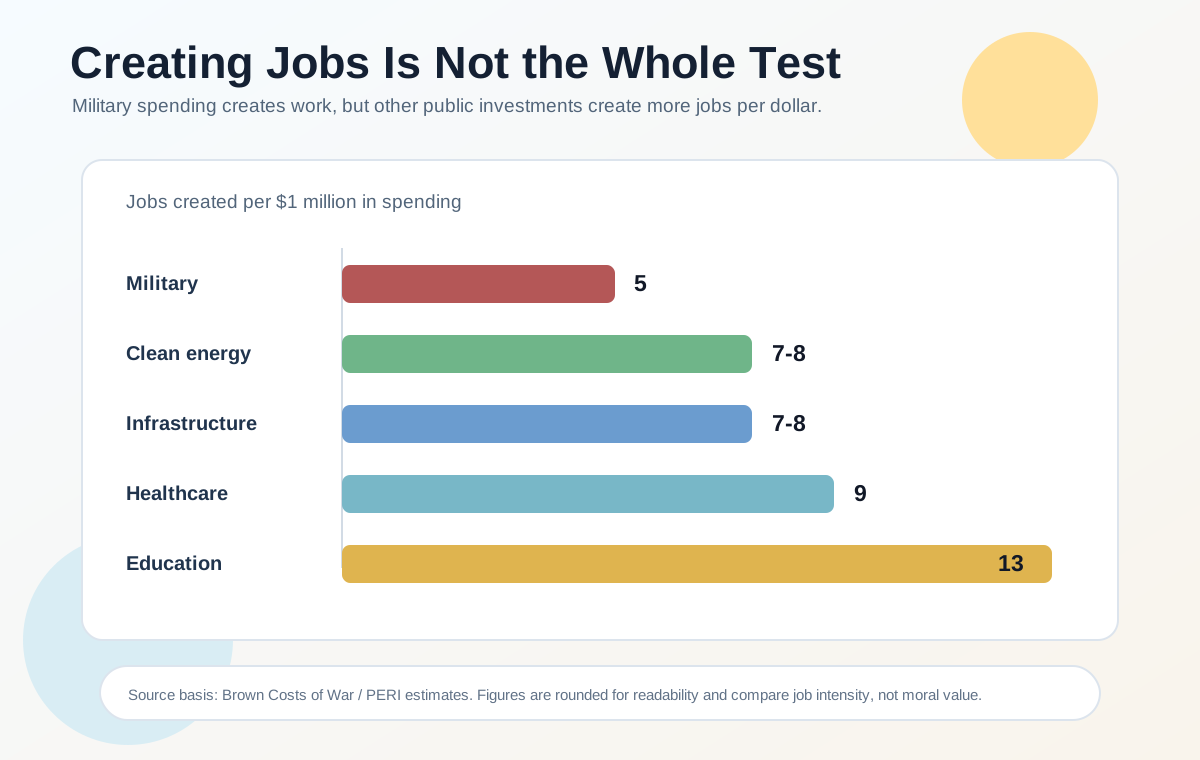
Brown University's Costs of War project summarizes the employment tradeoff clearly. Military spending produces about five jobs per $1 million. The same spending produces nearly thirteen jobs in education, about nine in healthcare, and roughly seven to eight in infrastructure or clean energy. PERI research by Heidi Garrett-Peltier reaches the same basic conclusion: dollar for dollar, domestic spending usually creates more jobs than military spending.
That does not mean every defense job is bad or every domestic job is good. It means the slogan is weak. If the main defense of a weapons program is employment, then the program is already losing the economic argument. The same money could usually employ more people somewhere else.
The Mexico gun-flow example shows the wider cost
The old image on this post referred to "creating jobs" by sending guns to Mexico. That line points to a real policy problem. The Justice Department's 2024 announcement of ATF firearms-commerce data highlighted a 63% increase in crime guns recovered in Mexico and traced between 2017 and 2023. For 2023 traces, the major source states were Texas, Arizona, and California. Those numbers do not mean every gun in Mexico came from the United States, but they do show a persistent cross-border trafficking problem.
Once those weapons move into cartel violence, the costs multiply. Mexico pays through policing, military operations, corruption pressure, displacement, extortion, business disruption, and human loss. The United States then spends more on investigations, border enforcement, prosecutions, intelligence, and diplomatic damage control. If the original sale created a job, the damage can create many more jobs cleaning up the consequences. That is not a healthy model of growth.
Legal responsibility and moral responsibility are different
In 2025, the U.S. Supreme Court unanimously blocked Mexico's lawsuit against major U.S. gun manufacturers in Smith & Wesson Brands v. Estados Unidos Mexicanos. The Court held that Mexico had not plausibly alleged the kind of aiding-and-abetting conduct needed to get around the Protection of Lawful Commerce in Arms Act. In plain English, the legal threshold for manufacturer liability was not met.
That ruling matters, but it does not settle the moral or economic question. A company can be legally shielded and still operate in a market that creates downstream harm. A policy can be lawful and still deserve criticism. The "jobs" defense often tries to blur that distinction by making employment sound like a full answer.
What kind of work should policy encourage?
A serious jobs policy would ask what kind of employment strengthens a community over time. Work that repairs bridges, teaches children, treats patients, installs clean power, builds housing, improves water systems, or develops useful technology creates paychecks while also leaving behind public value. Weapons can sometimes be necessary for defense, but weapons sales into unstable markets should not get a free pass because someone earned wages along the way.
The goal should not be to sneer at workers in the weapons industry. People take the jobs available to them, and many have real skills that could be used elsewhere. The problem is the political argument that treats any job as proof of social usefulness. If an industry needs harm, fear, instability, or arms proliferation to sustain demand, then the jobs are part of a larger failure, not a complete justification.
Creating jobs matters. Creating the right jobs matters more.
Sources and notes: Employment comparison figures from Brown University's Costs of War findings and PERI's Job Opportunity Cost of War. Firearms trafficking context from the Justice Department's announcement of ATF's National Firearms Commerce and Trafficking Assessment, Volume IV. Legal context from the Supreme Court's 2025 opinion in Smith & Wesson Brands, Inc. v. Estados Unidos Mexicanos.