In 2012, Business Plexus published Inflation and the National Debt, arguing that a healthier economy, rising wages, and some inflation could make debt easier to carry, while austerity risked pushing the country toward deflation. That argument made sense in the long shadow of the housing crisis. The question in 2026 is what actually happened after more than a decade of recovery, pandemic disruption, inflation, and much higher interest rates.
The short version: inflation did help some borrowers by raising nominal wages, asset prices, and tax receipts. But it did not solve the federal debt problem. The national debt grew faster than the relief inflation provided, and the move from near-zero interest rates to higher rates made the debt more expensive to roll over.
Inflation: quiet for years, then suddenly not
After the 2007-2009 housing crisis, the economy spent years fighting weak demand. Inflation stayed low through much of the 2010s, and in 2015 it nearly disappeared on an annual-average basis. That was the world the old article was reacting to: unemployment was still healing, households were repairing balance sheets, and policymakers worried that too much austerity could choke off recovery.
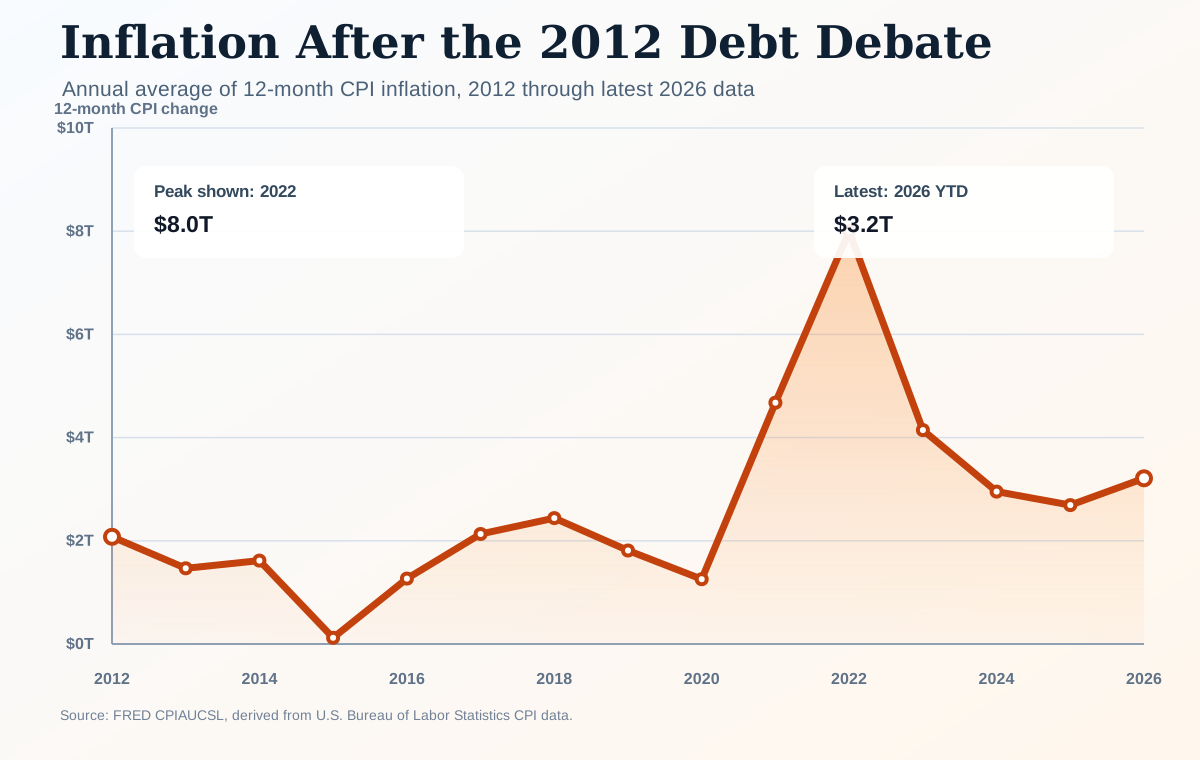
The pattern changed after the pandemic. Supply chains broke, stimulus supported demand, housing and goods prices jumped, and inflation reached its highest level in decades. The chart shows annual average 12-month CPI inflation peaking around 8% in 2022, then cooling in 2023 and 2024. By 2026, inflation is no longer the near-deflation problem of the early 2010s, but it also is not fully back to the quiet pre-pandemic pattern.
The debt: inflation did not outrun borrowing
The national debt was already a major concern in 2012, at roughly $16 trillion. By June 10, 2026, Treasury's daily Debt to the Penny dataset showed total public debt outstanding at about $39.2 trillion. The increase reflects ordinary deficits, tax and spending choices, the pandemic emergency response, higher interest costs, and the compounding effect of borrowing on top of borrowing.
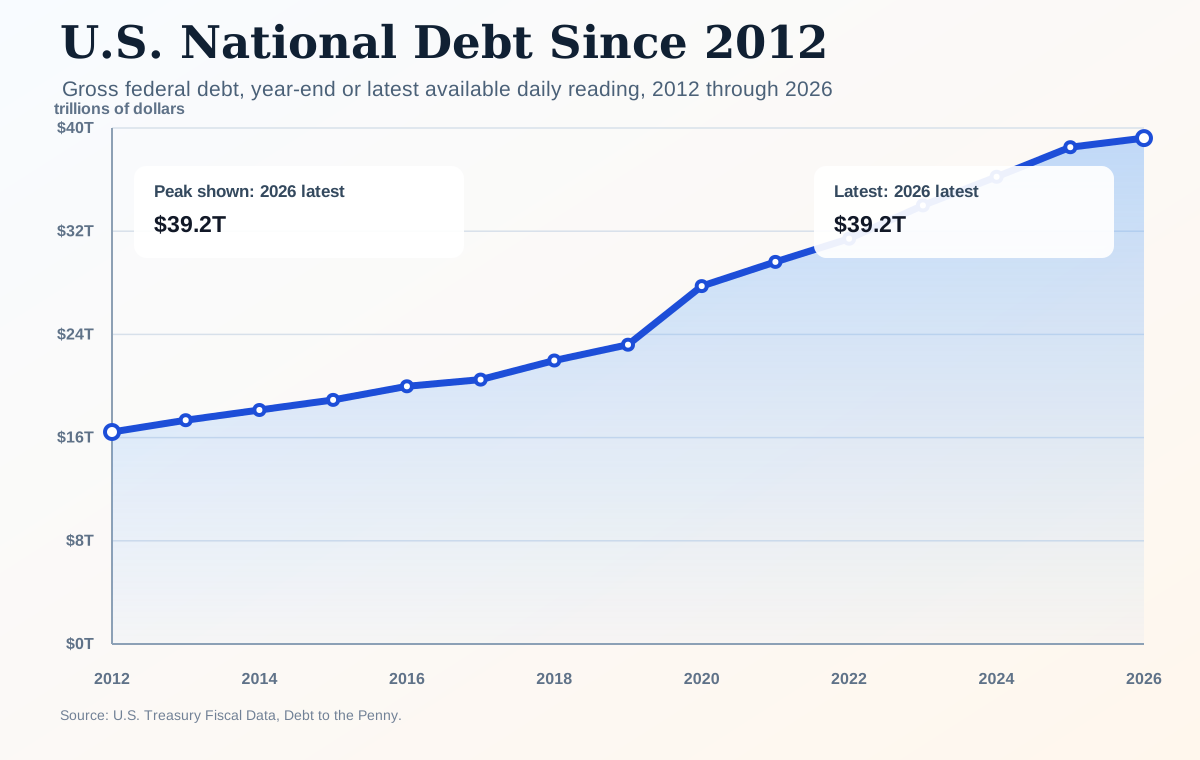
This is the key difference between 2012 and 2026. In the housing-crisis aftermath, the country had a weak private sector, damaged household balance sheets, and very low rates. The danger was doing too little and letting the recovery stall. In 2026, the problem is less about escaping deflation and more about carrying a much larger debt load in a world where rates can stay higher for longer.
What changed since the 2009 recession?
The Great Recession officially ended in June 2009, according to the National Bureau of Economic Research, but the repair process took years. Homeowners were underwater, banks were cautious, job growth was uneven, and the Federal Reserve held rates near zero to support demand. In that environment, moderate inflation could help because it lifted nominal incomes and made fixed debts easier to bear.
Today the pressure points are different. Households are no longer recovering from the same kind of nationwide mortgage collapse, and banks are not dealing with the same post-2008 credit freeze. Instead, the economy is dealing with the aftereffects of a pandemic shock, a higher price level, higher mortgage rates, more expensive Treasury financing, and a federal budget that has less room for error.
Inflation still reduces the real value of fixed-rate debt, but it is not magic. If wages do not keep up, households feel poorer. If investors demand higher yields, new government borrowing becomes more expensive. If the federal government keeps running large deficits, inflation can shrink the value of old debt while new debt piles up at higher interest rates.
The 2026 lesson
The 2012 instinct was partly right: austerity during a weak recovery can be self-defeating, and a healthy economy with rising incomes is better for debt sustainability than stagnation. But the 2026 update adds a warning. Growth and moderate inflation help most when borrowing is under control. Once debt is much larger and rates are higher, inflation becomes a harsher tradeoff, not an easy escape hatch.
So the better goal is not simply "more inflation" or "less spending" in isolation. It is a stronger productive economy, wage growth that is not eaten by prices, fiscal choices that slow the debt path, and a realistic understanding that the low-rate world after the housing crisis is not the same world we are living in now.
Sources and notes: Inflation chart calculated from FRED CPIAUCSL, based on U.S. Bureau of Labor Statistics CPI data. Debt chart uses the U.S. Treasury Fiscal Data Debt to the Penny dataset. Recession timing references the NBER Business Cycle Dating Committee. Figures are rounded for readability.