Gold is supposed to be the place investors hide when the market starts to look scary. That is the simple version of the story, and it is often true. When investors are worried about banks, wars, currencies, or the stability of the financial system, gold can catch a bid because it is nobody's liability and it does not depend on corporate earnings.
But today was a useful reminder that gold is not just a fear trade. It is also a rates trade.
On Friday, June 5, 2026, stocks sold off sharply after a stronger-than-expected May jobs report. The Nasdaq was hit especially hard, while the S&P 500 also moved lower. Gold, instead of catching the classic safe-haven bid, fell more than 2% during the session. That can feel backwards at first, but it makes sense once you look at what kind of fear was driving the market.
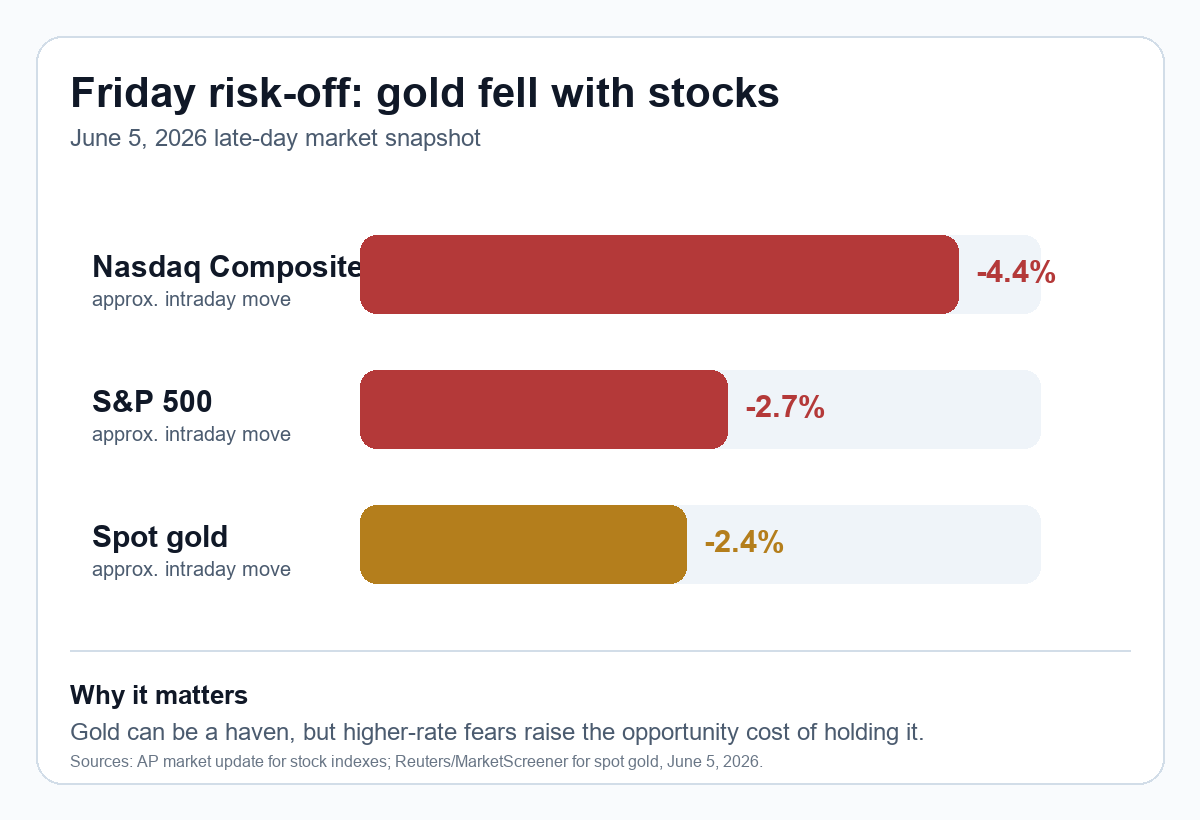
Gold can fall with stocks when the selloff is about higher rates rather than pure panic.
The jobs report changed the rate conversation
The Labor Department reported that the U.S. economy added 172,000 jobs in May, while the unemployment rate held at 4.3%. That was much stronger than economists expected. In ordinary language, the report said the economy still has momentum. In market language, it said the Federal Reserve may have less reason to cut rates and more reason to keep policy tight, or even talk tougher about inflation.
That is where gold runs into trouble. Gold does not pay interest. A Treasury bill does. A money market fund does. A short-term bond does. When yields rise, the cost of sitting in gold rises too, because investors are giving up more income to hold it.
This is why gold can fall on a day when stocks are also falling. If the market is selling stocks because it fears recession or a financial accident, gold often looks attractive. If the market is selling stocks because rates are moving higher, gold can get pulled down by the same force.
The safe-haven trade was more selective
There was still a flight to safety today, but it was not a clean rush into every asset that has ever been called safe. Investors appeared more interested in assets that benefit from, or at least survive, higher short-term rates: cash, Treasury bills, and the U.S. dollar. Longer-duration bonds were more complicated because yields rose. When yields rise, existing bond prices fall, especially for longer maturities.
That is an important distinction. A Treasury bill and a 20-year Treasury bond are both government debt, but they do not behave the same way when the market suddenly reprices interest-rate expectations. The short bill is close to cash. The long bond is a big bet on where rates and inflation will go over time.
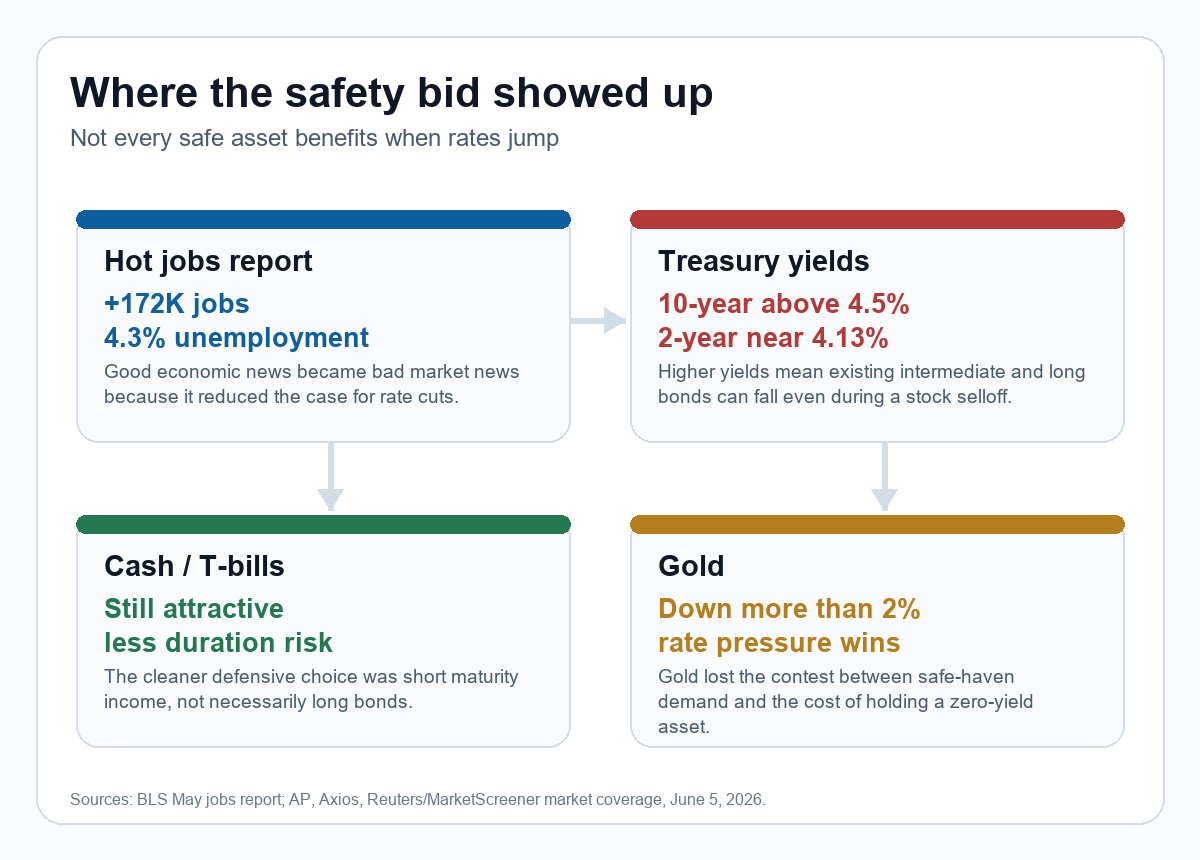
The defensive bid was more visible in cash-like assets and the dollar than in long bonds or gold.
Why gold was vulnerable
There are several reasons gold was under pressure at the same time stocks were falling.
First, the opportunity cost changed. When the market thinks rates may stay higher for longer, non-yielding assets have to work harder to justify their place in a portfolio.
Second, a stronger U.S. dollar can pressure gold. Gold is priced globally in dollars, so a firmer dollar can make gold more expensive for buyers using other currencies and can reduce some of the urgency to own it as a currency hedge.
Third, gold had already been treated as a crowded macro trade. When a trade has worked for a while, a sudden change in the rate outlook can cause investors to take profits quickly. In that kind of market, gold can behave less like a quiet haven and more like another liquid asset people sell when they need to reduce exposure.
Finally, the market was not necessarily saying the world was safe. It was saying the Fed may have a harder inflation problem. That is different. Inflation fear can help gold in some environments, but if inflation fear arrives with rising yields and a stronger dollar, gold does not always win.
Why technology stocks were hit so hard
The Nasdaq's drop fits the same rate story. Growth and technology shares are especially sensitive to interest rates because investors value them partly on earnings they expect far in the future. Higher rates make those future earnings less valuable today. When yields jump, richly valued technology shares often feel it first.
That helps explain why the same jobs report could be good news for workers and bad news for the stock market. More jobs usually means a stronger economy. But if the economy is too strong for the Fed's comfort, the market starts thinking about tighter financial conditions.
What to watch next
The next question is whether this was a one-day repricing or the start of a broader move. I would watch four things.
First, watch the 10-year Treasury yield. If it keeps pushing higher, gold and growth stocks may remain under pressure. Second, watch the dollar. A stronger dollar would make it harder for gold to rebound. Third, watch Fed commentary. If officials lean into the idea that rates may need to stay high, the market will have to digest that. Fourth, watch whether selling spreads from technology into credit markets. If stress becomes more systemic, gold's safe-haven role could reappear.
For now, the lesson is simple: gold is a safe haven, but not in every kind of storm. Today the storm was not just fear. It was fear of higher rates.
Sources: BLS Employment Situation, June 5, 2026; AP market update; Reuters gold coverage via MarketScreener; Axios interest-rate coverage. Market figures cited during Friday's session may differ from final closing prices.