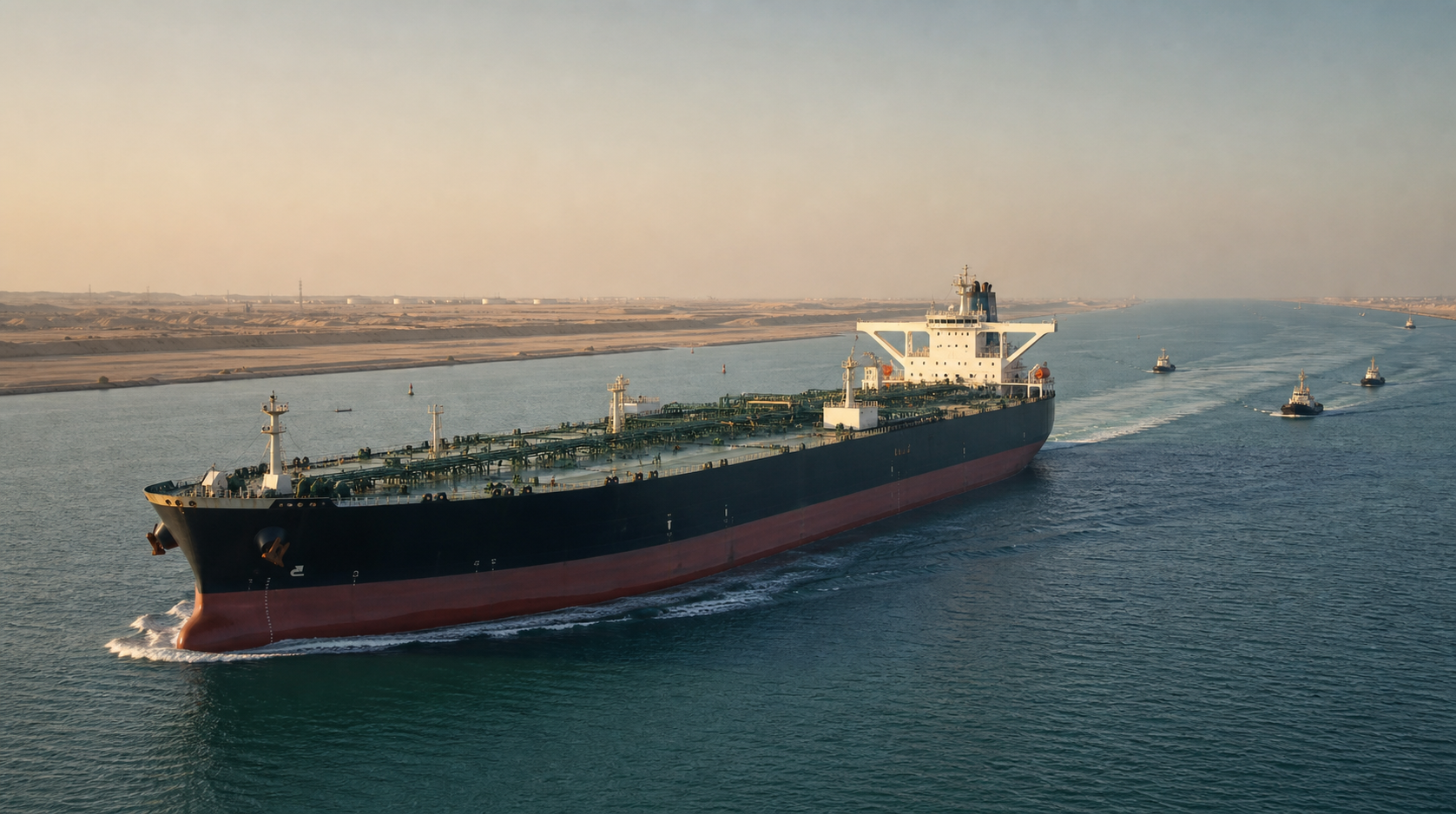
The U.S.-Iran agreement announced on June 15, 2026, has changed the psychology of the oil market. Traders immediately began pricing in a reopening of the Strait of Hormuz, lower war risk, and an eventual return of Persian Gulf exports. That relief is real. It does not mean oil and gas flows snap back to normal the moment diplomats shake hands.
The Strait of Hormuz is not a light switch. It is a narrow shipping corridor, a military risk zone, an insurance problem, a tanker-positioning problem, a port problem, and a production-restart problem all at once. More than 10 million barrels per day of Middle Eastern oil production has reportedly been shut in during the crisis, and the affected barrels are not all equally easy to restore.
Where the oil normally comes from
The reason the market cares so much is concentration. In normal conditions, Hormuz handles a large share of the world\'s seaborne crude and condensate. The flow is dominated by a few Gulf producers, especially Saudi Arabia, Iraq, the United Arab Emirates, Iran, and Kuwait.
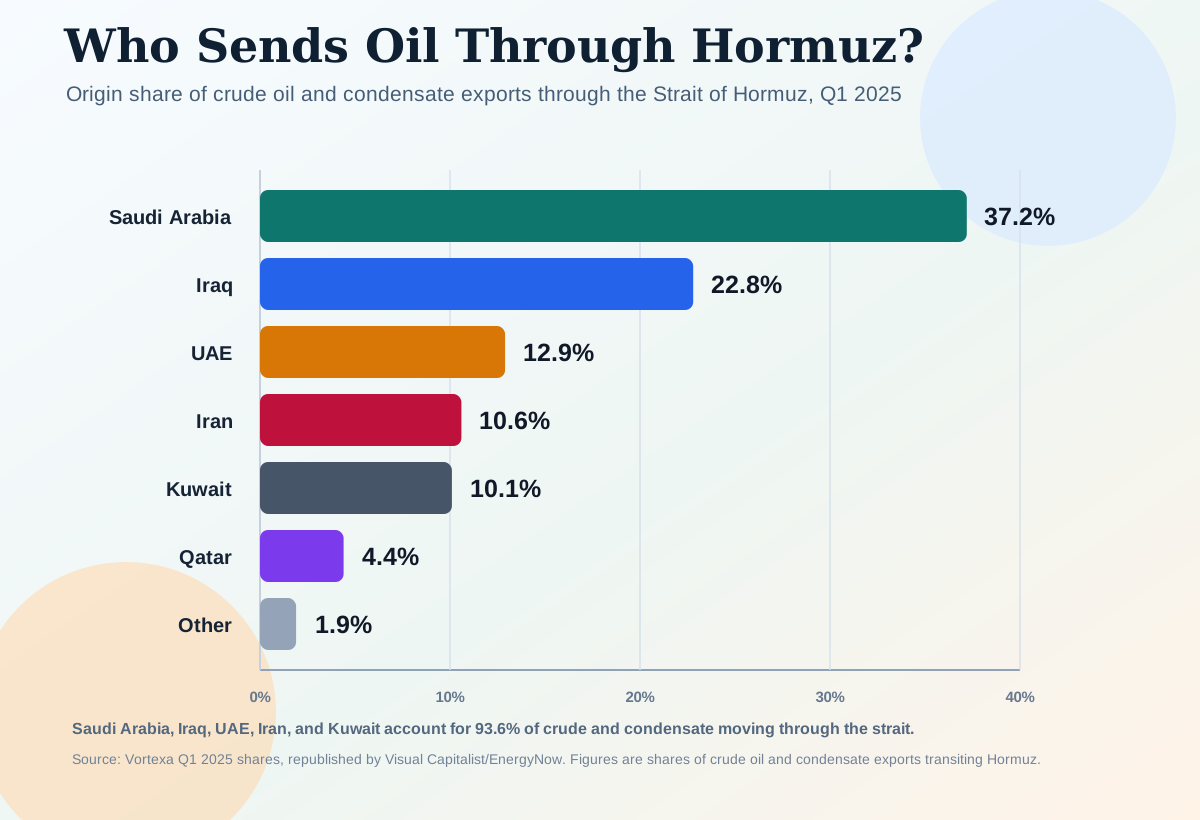
The chart shows why the restart will not be uniform. Saudi Arabia and the UAE have some pipeline and port options outside the strait. Iraq, Kuwait, Qatar, and Iran are more exposed. Iraq is especially vulnerable because most of its southern export system depends on Basrah and Gulf access. If the strait is technically open but tankers, insurers, or port systems are not ready, Iraq has fewer practical workarounds.
Challenge one: the waterway has to be cleared and trusted
The first issue is physical security. Reports on the agreement describe a period for mine removal, channel checks, and a staged return of commercial traffic. Even after a reopening is announced, shipowners will wait for proof that the route is safe. A single damaged tanker, drifting mine, drone incident, or ambiguous naval order can keep traffic below normal.
That matters because oil markets do not just need permission to move barrels. They need confidence. Tanker operators, crews, flag states, port authorities, insurers, and banks all have to believe the route is safe enough to use.
Challenge two: insurance and financing have to normalize
Shipping through a war-risk zone is expensive. During the crisis, premiums, security requirements, and compliance checks made some cargoes uneconomic or impossible to move. A deal can reduce those costs, but underwriters do not usually remove risk premiums instantly. They wait for actual traffic, naval coordination, and evidence that the ceasefire is holding.
Financing is another layer. Cargoes need letters of credit, sanctions reviews, counterparties, and port documentation. If Iran-related sanctions relief is part of a broader negotiation rather than immediate full normalization, some banks and commodity houses will move cautiously even when oil prices are falling.
Challenge three: tankers are in the wrong places
Oil supply is not only production. It is barrels plus ships plus loading slots plus buyers. When a major chokepoint is disrupted for weeks, tankers reroute, wait offshore, discharge somewhere else, or get pulled into other trades. Bringing them back takes time.
That delay also changes the economics of shipping. As tanker availability tightens, owners can charge much higher day rates, which can raise delivered crude costs even while benchmark oil prices are falling. We break down that side of the market in more detail here: why tanker owners are making so much money as Hormuz reopens.
That can create a strange short-term market. The physical barrels may exist, and buyers may want them, but the right vessel may not be in the right place at the right time. Freight rates can stay elevated even after crude prices fall because the shipping system is still untangling itself.
Challenge four: shut-in fields do not all restart cleanly
Some oil production can be restored quickly. Other fields need pressure management, inspections, power, water injection, gas handling, maintenance crews, and export certainty before operators are comfortable ramping up. Offshore fields and older reservoirs are not always forgiving when they are shut in and restarted under stress.
That is why the headline number can be misleading. A region may have more than 10 million barrels per day shut in, but the first few million barrels can return faster than the last few. The final tranche may be delayed by damaged equipment, reservoir constraints, crude-quality issues, or simple scheduling at export terminals.
Challenge five: Iraq is likely to recover more slowly
Iraq is the clearest weak link. Its southern exports are heavily tied to Basrah, and Basrah depends on access through the Gulf. Saudi Arabia can lean more on the East-West pipeline to the Red Sea. The UAE can use Fujairah. Iraq has far less bypass flexibility for southern barrels.
That means Iraq can remain a deficit even if Saudi and Emirati exports recover first. For refiners that buy Basrah grades, the problem is not just total barrels. It is the specific quality of crude they were configured to run. Replacing medium and heavy Gulf grades with lighter barrels from elsewhere can be expensive or operationally awkward.
Challenge six: natural gas and LNG are a separate problem
The oil market may normalize faster than gas. Qatar is central to global liquefied natural gas supply, and LNG systems are more rigid than crude markets. Gas must be produced, liquefied, loaded onto specialized LNG carriers, and delivered into receiving terminals. If facilities were damaged or if ships are out of position, recovery can take much longer than simply reopening a sea lane.
That is why Europe and Asia may see different timelines. Oil can sometimes be rerouted or replaced through inventories and alternative grades. LNG has fewer spare ships, fewer substitute suppliers, and more long-term contract constraints.
What the deficit could look like
If the pre-crisis disruption removed more than 10 million barrels per day from effective supply, the market should not expect that entire volume to return in one step. A plausible restart sequence would bring back the safest and easiest Saudi and UAE barrels first, followed by cargoes that depend on more complicated shipping, insurance, or field work. Iraq and some LNG flows may lag.
Even if 70% to 80% of normal crude flows return over the next few months, that still leaves a meaningful deficit. A 20% shortfall on a 14 million barrel-per-day disrupted flow is nearly 3 million barrels per day, enough to keep prices sensitive to any additional outage. That is why oil can fall sharply on deal news and still remain above pre-crisis expectations.
The agreement reduces risk, but it does not erase the bottleneck
The big market takeaway is that diplomacy can remove the worst-case scenario faster than it can rebuild the physical supply chain. The U.S.-Iran agreement lowers the probability of a prolonged blockade and gives producers, shippers, and buyers a path back to normal. But oil supply depends on more than a headline.
Until mines are cleared, tankers return, insurers lower premiums, fields restart, Basrah exports stabilize, and LNG facilities prove reliable, the world is likely to live with a partial Persian Gulf supply deficit. The deal opens the door. The oil still has to move through it.
Sources and notes: Current agreement and market reaction from Al Jazeera, Business Insider, and the Guardian. Restart risks and shut-in production framing from OilPrice/Investing.com and the Guardian. Strait of Hormuz chokepoint and bypass context from the U.S. Energy Information Administration. Country-flow shares are Vortexa Q1 2025 data republished by Visual Capitalist/EnergyNow. Figures are rounded for readability.