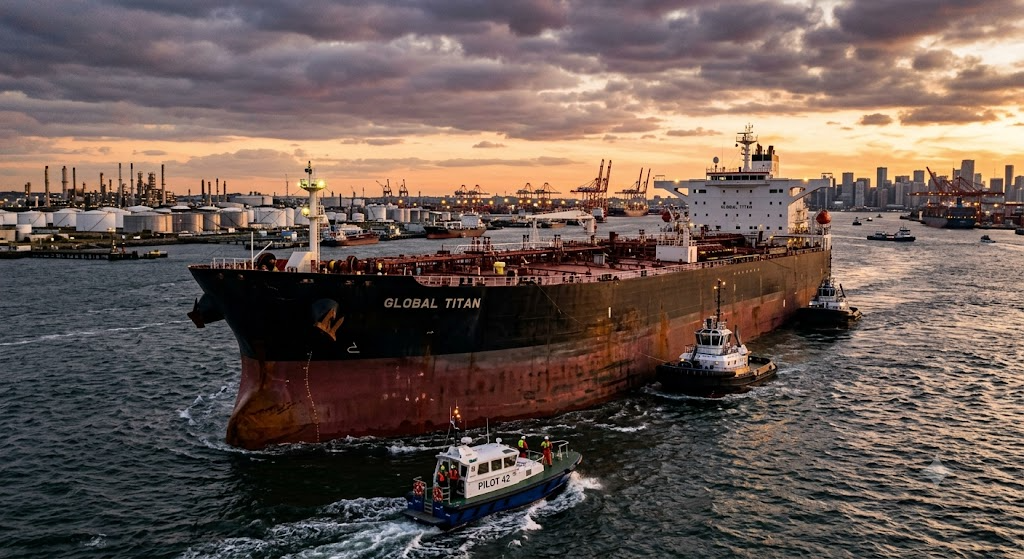
Tanker owners are having the strange good fortune of making more money just as the oil market tries to calm down. Crude prices have eased as traders price in a reopening of the Strait of Hormuz, but the shipping market has not normalized. In fact, the cost of moving oil out of the Gulf has surged because ships are scarce, routes are risky, and hundreds of cargoes still need to be cleared from a disrupted system.
This is the physical side of the oil market. Prices on a screen can fall quickly; ships, crews, insurers, ports, naval escorts, mine-clearance operations, and loading schedules move more slowly. For readers trying to follow the broader market, our earlier guide on how to track oil and energy prices explains why tanker data, floating storage, futures curves, and product prices matter alongside the headline Brent or WTI quote.
The same lag is central to the broader restart problem discussed in our article on why the U.S.-Iran deal does not mean oil flows through Hormuz immediately return to normal. Tanker rates are one reason the restart can remain costly even after crude traders begin pricing in more supply.
The basic story: oil prices down, tanker rates up
OilPrice reported on June 23, 2026, citing Reuters, that the cost of hiring a tanker in the Gulf nearly doubled in a week, rising from about $106,000 per day to more than $190,000 per day. It also reported that some very large crude carriers, or VLCCs, hauling cargoes through Hormuz had seen daily earnings near $470,000.
Those numbers are extraordinary, but the direction makes sense. Oil producers want barrels moving again. Refiners in Asia want cargoes. Some vessels are still trapped or delayed inside the Gulf. Many shipowners remain cautious about transit safety. Insurance and operational risks remain elevated. The result is a sudden scramble for available tonnage.
OilPrice separately reported that more tankers have begun broadcasting positions again after weeks of dark-mode movements, but visibility is only one part of normalization. The same report said 25 AIS-visible transits through Hormuz were recorded on June 22, while shipowners remained cautious and Indian Oil Corporation reportedly failed to charter three tankers for Gulf cargoes.
Why there still are not enough ships
Tanker markets are highly sensitive to effective supply. The number of vessels in the world does not have to change for available capacity to shrink. A ship waiting outside a dangerous route is unavailable. A ship sailing dark and slowly is less productive. A ship stuck in the Gulf with cargo on board is not available for a new fixture. A ship waiting for insurance, naval guidance, mine-clearance clarity, or port instructions is capacity removed from the market.
That is the key to the Hormuz rate spike. The world may have enough tankers in a normal month, but it does not necessarily have enough tankers in the right place, with the right insurance, with willing crews, at the exact moment producers and refiners all want to restart flows.
Lloyd's List reported that VLCC spot rates rose sharply as confusion continued around the Strait of Hormuz, with the Baltic Exchange's West Africa-China VLCC index rising 92 percent week over week to nearly $189,000 per day. That is not the exact same route as Gulf-to-Asia cargoes, but it shows how a Hormuz disruption can pull tonnage and raise rates globally.
How tanker owners make money
At the simplest level, tanker owners make money by renting out ships. But there are several ways this happens.
Voyage charter: A customer hires the ship for one trip, usually from a loading port to a discharge port. The rate may be quoted in Worldscale terms or as a lump sum. The owner typically pays voyage costs such as fuel, port charges, canal dues, pilotage, and some operating expenses, then keeps whatever remains.
Time charter: A customer hires the vessel for a period of time, often months or years. The charterer pays a daily hire rate and usually pays voyage-related costs such as bunkers and port expenses. The owner provides the ship, crew, maintenance, and insurance.
Spot market exposure: Owners with ships available for immediate employment benefit most when rates spike. A company locked into long-term charters at lower rates may miss the windfall. A company with open vessels in the right basin can suddenly earn multiples of normal daily revenue.
Demurrage: If loading or unloading takes longer than the allowed laytime, the charterer may owe extra payments. In congested or disrupted markets, demurrage can become meaningful, especially when ships are waiting for berths, inspection, escort, documents, or safe-passage instructions.
Floating storage: In some markets, tankers are hired to store oil at sea. This becomes more attractive when land storage is limited, logistics are blocked, or the futures curve makes storage profitable. During a crisis, floating storage can also be involuntary: cargoes are loaded but cannot safely move.
What is TCE?
The daily numbers people quote are often discussed as time charter equivalent earnings, or TCE. TCE is a way of converting a voyage into a daily earnings figure. A common formula is: gross freight revenue minus voyage expenses, divided by the number of days in the voyage.
That matters because a headline day rate is not the same thing as pure profit. A tanker earning $190,000 per day still has costs. Fuel can be enormous. War-risk insurance can surge. Port fees, pilotage, tugs, canal charges, commissions, crew costs, maintenance, drydock planning, financing, and management fees all matter.
Still, when VLCC earnings move from ordinary levels to hundreds of thousands of dollars per day, owners with available ships can produce exceptional cash flow. Even after costs, the margin can be very large compared with normal tanker-cycle earnings.
The cost side: why high rates are not all free money
Fuel is usually one of the biggest voyage costs. A VLCC burns marine fuel while laden, while ballasting to the next loading region, and sometimes while waiting. Speed matters: a ship that moves faster earns the next cargo sooner, but fuel consumption rises sharply with speed.
Insurance is the crisis variable. War-risk premiums can rise quickly when a route is threatened by mines, missiles, drones, seizures, or military escalation. A shipowner may demand a much higher rate not simply because the owner is greedy, but because the vessel, crew, cargo, and balance sheet are being exposed to a different level of risk.
Crew costs also change in dangerous waters. Some high-risk zones trigger bonus pay, crew-rights issues, or refusal concerns. Owners may have to manage crew morale, legal obligations, security advice, and operational restrictions.
There are also capital costs. A modern VLCC is an expensive asset, and many owners finance ships with debt. If the ship is idle, the debt still exists. If the market spikes, owners try to capture enough cash to offset years when rates are weak. Tanker shipping is cyclical; boom periods often pay for long stretches of mediocre returns.
Why Hormuz creates such a powerful rate shock
The Strait of Hormuz is not just another shipping lane. It is the main exit route for much of the crude and condensate produced in the Persian Gulf. The U.S. Energy Information Administration has called Hormuz the world's most important oil transit chokepoint by volume, with roughly one-fifth of global petroleum liquids consumption moving through it in normal times.
When a chokepoint like Hormuz is disrupted, three things happen at once. First, ships already inside the Gulf can be trapped or delayed. Second, ships outside the Gulf demand much higher compensation before entering. Third, cargo owners suddenly compete for the smaller pool of vessels willing and able to move.
That is why freight can rise even while crude falls. The oil futures market may believe supply is coming back. The tanker market is asking a more practical question: who is actually going to move it, at what risk, and when?
Who pays these higher tanker costs?
In the short run, charterers pay. That may mean producers, traders, oil majors, national oil companies, refiners, or intermediaries. But costs eventually move through the system. Higher freight can reduce the netback to producers, raise delivered crude costs for refiners, widen regional price spreads, and influence which barrels refiners choose.
For example, if Middle Eastern freight becomes too expensive, a buyer in Asia may look for Atlantic Basin barrels, Russian barrels, U.S. crude, West African crude, or stored inventories. That does not mean those alternatives are always cheaper, but freight changes the delivered price calculation.
Consumers do not see a line item called VLCC freight on a gasoline receipt. But freight affects delivered crude costs, refining economics, diesel markets, jet fuel, and regional supply balances. The effect is indirect, but real.
That is also why gasoline at the pump can move differently from crude oil. A lower Brent or WTI price helps, but pump prices also include refinery margins, ethanol or blending costs, taxes, local fuel specifications, wholesale inventories, trucking, station margins, and timing delays. Higher tanker rates can raise the delivered cost of imported crude or refined products, especially in regions dependent on seaborne supply, but the effect on a gallon of gasoline is usually diluted compared with a major move in crude or refining margins. In plain terms: tanker rates can keep fuel prices stickier than oil prices alone would suggest, but they usually are not the main driver of what drivers pay unless the shipping disruption is severe and sustained.
Why tanker stocks can benefit
Public tanker companies are leveraged to spot rates. When rates rise sharply, investors often look at tanker owners such as Frontline, DHT, Euronav/CMB.TECH, International Seaways, Teekay Tankers, Nordic American Tankers, and others depending on vessel class and market exposure.
The important distinction is contract coverage. A company with many vessels on fixed long-term charters may be safer but less exposed to the spike. A company with open VLCCs, Suezmaxes, or Aframaxes in the right region may capture more upside, but also faces more volatility when rates fall.
This is why tanker stocks can move differently from oil prices. Lower crude prices can hurt oil producers, but high freight rates can help shipowners. During a logistics crunch, the money is not only in the barrel. It is in the ability to move the barrel.
How long can the windfall last?
The windfall lasts as long as effective vessel supply remains tight. Rates can fall quickly if traffic normalizes, insurance costs decline, mine-clearance and navigation rules become clear, and vessels trapped in the Gulf rejoin the market. But rates can stay high if shipowners distrust the reopening, if dark-mode movements continue, if naval or insurance requirements remain unclear, or if producers rush to clear months of backlogged cargoes.
The current setup is therefore transitional. The crude market is pricing the expectation of returning supply. The tanker market is pricing the messy process of actually moving that supply. Those are not the same thing.
My read is that tanker owners are making unusually strong money because they are selling something scarce: not just a ship, but a safe, insurable, crewed, properly positioned ship willing to enter a still-uncertain chokepoint. That scarcity may fade, but it has not faded yet.
This article is general market commentary and not investment advice.